Choosing Your First Cake Pan
By Love Coma Cakes Editorial · January 5, 2026 journal issue · Published October 10, 2026
A practical guide to cake-pan dimensions, materials, handling and storage for a home baker building a small useful kit.
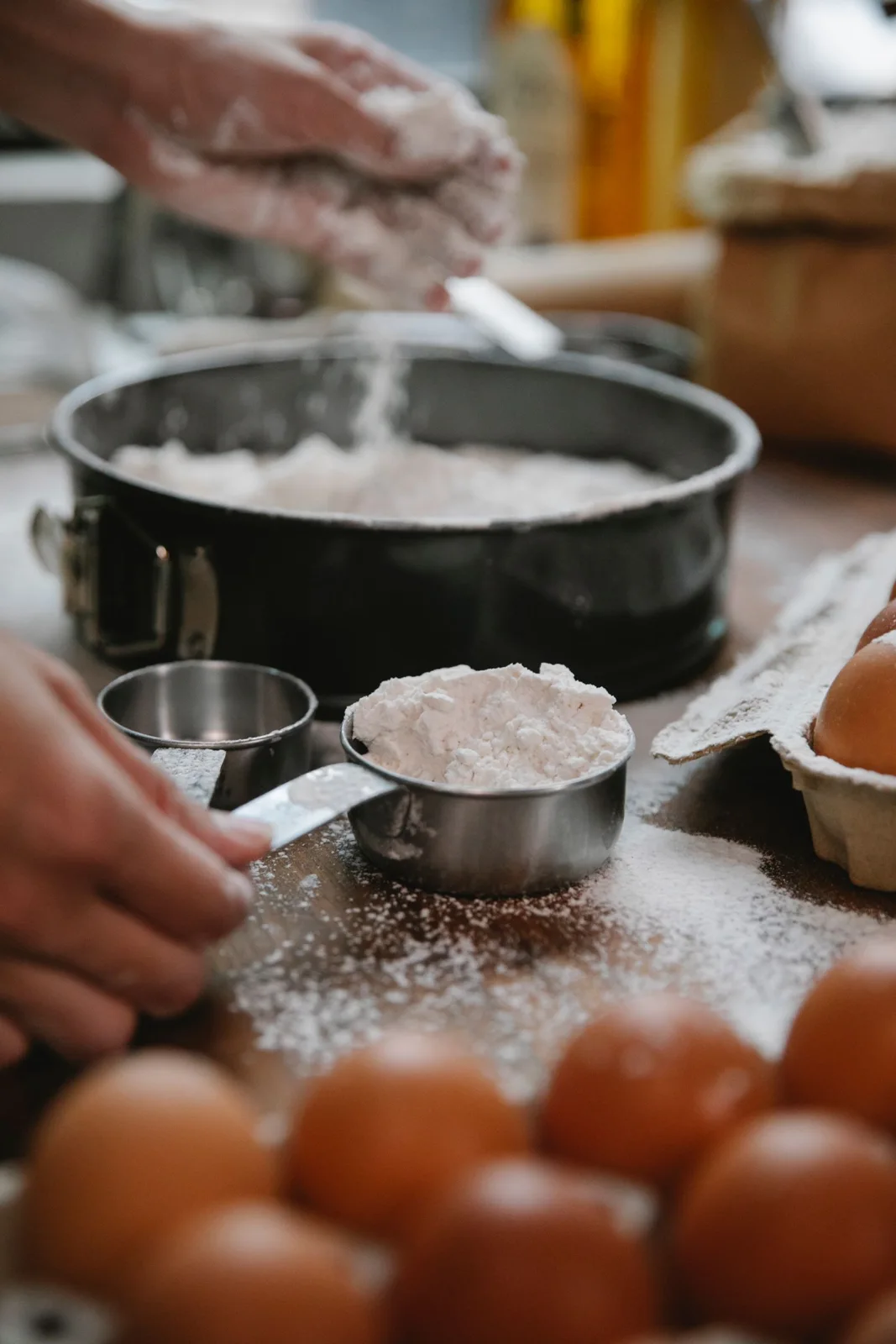
Illustrative photography by Klaus Nielsen / Pexels. Images show editorial inspiration, rather than a product or recipe test.
A first cake pan should match the cakes you are likely to bake. That sounds obvious until you face a shelf of round tins, loaf pans, removable bases and elaborate shapes. Buying a large set can feel efficient, but unused shapes take up space without making the first bake easier. Start with a dependable recipe you want to repeat, then buy the pan it specifies. The recipe gives you a practical brief: shape, internal dimensions, depth and sometimes material.
Our buying advice is research-led. Links may take you to retailers; any paid relationship is identified beside the link. See our affiliate disclosure.
Measure the space before the pan
Measure your oven shelf, including clearance around its edges, and check whether the shelf remains level when pulled forward. A pan’s external handles or rolled rim can make it larger than the stated baking area. Consider where the hot pan will land after baking, too. A small kitchen may need a clear heatproof surface before the oven is switched on.
Next measure storage space. A deep round pan can be awkward in a shallow drawer, while a tray may fit vertically beside chopping boards. Make sure storing a pan does not require stacking heavy objects inside it or repeatedly scraping a coated surface. A pan that is convenient to reach is more likely to become part of your routine.
Understand the useful distinctions
Material affects handling, care and how a pan behaves in the oven, but there is no universally best choice for every recipe. Read the recipe and the manufacturer’s instructions together. In particular, do not apply a metal-pan cooking schedule to another material without checking guidance. Avoid treating color or thickness as a guarantee of a specific baking result.
| Pan type | Why you might consider it | What to check |
|---|---|---|
| Plain metal, fixed base | Straightforward construction and broad recipe use | Preparation instructions and cleaning method |
| Coated metal | Convenient release for suitable recipes | Utensil restrictions and coating care |
| Removable base | Easier access for some delicate bakes | Leakage risk with loose batter |
| Springform | Useful when a recipe specifically calls for it | Closure, seal and recipe compatibility |
| Decorative shape | Distinctive presentation | Difficult corners, release and storage |
Size is a recipe decision
Look for measurements in centimeters or inches, rather than labels such as family size. Check whether the measurements refer to the top edge, base or internal cavity. Sloped sides can create a meaningful difference between those points. Depth matters alongside width: two pans with the same diameter may hold different amounts of batter.
Resist filling a pan with an unfamiliar quantity of batter simply because there is room. A smaller pan can change batter depth and how the center cooks. A wider pan can produce a shallower cake. Use a recipe developed for your pan, or follow a reliable conversion guide with appropriate baking-time advice. The easiest first purchase supports a recipe without requiring conversion at all.
Inspect construction and handling
Look for a shape you can lift safely with oven gloves. Wide rims or handles may help, but only if they fit inside your oven. Sharp unfinished edges, a visibly warped base or a closure that feels unreliable are reasons to choose another item. For online purchases, read dimensions and care details before relying on styled photographs.
Consider cleaning honestly. If you routinely use a dishwasher, a hand-wash-only pan will require a habit change. If the pan has seams, channels or a removable base, picture how those areas will be cleaned and dried. Follow the manufacturer’s advice on soaking, detergents and storage. A pan should be fully dry before it is put away.
Buy one useful shape first
A simple round pan is sensible for someone who enjoys everyday cakes. A loaf pan suits a different routine. A rectangular tray may be useful for cakes intended to be cut and shared. None of these is an automatic substitute for the others. Choose the format that appears in recipes you genuinely want to make over the next few months.
Before paying, compare the single pan with sets containing it. A set is worthwhile only if the additional pieces have a clear role. Do not count a second size as useful merely because it nests neatly. You may gain more from a cooling rack or readable scale than from another pan. Read choosing baking scales if inconsistent measuring is the bigger gap in your setup.
A short first-use routine
Read and retain the care instructions, remove packaging and wash the pan as directed. Check the chosen recipe’s lining and greasing requirements. Some recipes depend on particular preparation, so a nonstick label does not override the recipe. Put a cooling rack or suitable heatproof landing area in place before baking.
After the bake, let the pan cool safely before cleaning according to its instructions. Avoid cutting directly in a coated pan unless its maker explicitly permits it. Record the pan’s dimensions alongside the recipe so you can repeat the same setup. Repetition is more useful than immediately buying a second style in search of an easier result.
Frequently asked questions
Should I buy a removable-base pan first?
Buy one when your intended recipes benefit from it. Check whether the recipe’s batter is suitable, because a removable base is not automatically watertight. A fixed-base pan can be simpler for other cakes.
Does a dark pan need a different temperature?
Follow the recipe’s material guidance and the pan manufacturer’s instructions. Do not assume a single temperature adjustment applies to every cake. Choose recipes that explain the recommended pan whenever possible.
What is the best upgrade after one pan?
Identify the obstacle you actually encounter: measuring, cooling, release or transport. Buy for that obstacle. The birthday cake planning guide shows how equipment fits into a complete project, and Baking contains more small-kit advice.
This story belongs to our January 2026 editorial issue. This edition was published and reviewed on October 10, 2026. Our guidance is based on editorial research and practical planning, not an undisclosed hands-on product test.