A Calm Plan for Baking a Birthday Cake at Home
By Love Coma Cakes Editorial · January 1, 2026 journal issue · Published October 10, 2026
Plan a manageable birthday bake around your schedule, kitchen space and serving needs, with useful advice on pans, cooling and carrying.
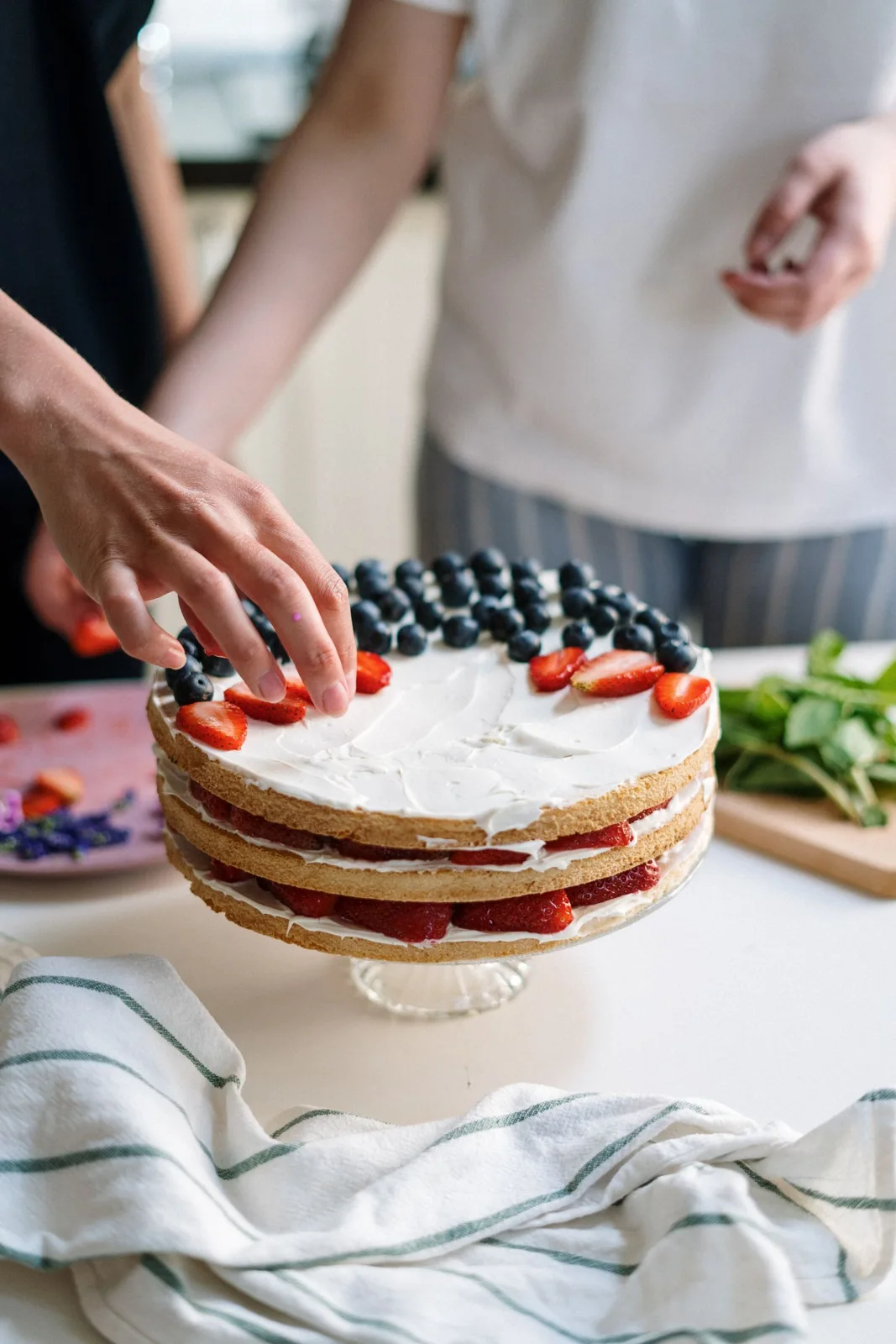
Illustrative photography by cottonbro studio / Pexels. Images show editorial inspiration, rather than a product or recipe test.
The difficult part of a birthday cake is often the calendar. The oven is needed for dinner, the refrigerator contains party food, and the cake has to be ready before guests arrive. A useful plan begins with those constraints, rather than a photograph of an elaborate finished cake. Choose a recipe from a dependable source that fits the pan you own and the time available. A modest cake served comfortably is a better project than a complicated cake assembled in a hurry.
Our buying advice is research-led. Links may take you to retailers; any paid relationship is identified beside the link. See our affiliate disclosure.
Decide what the cake needs to do
Write down the serving time, approximate guest count, travel arrangements and any ingredient restrictions before shopping. If someone has an allergy, check with them about suitable ingredients and preparation. Do not promise an allergen-free result from a shared kitchen without understanding their requirements. Also ask whether the cake must wait outdoors or travel in a warm vehicle; this changes the suitability of fillings and frosting.
For a first birthday bake, a single-layer cake or a tray cake is usually easier to manage than a tall stack. It requires fewer cooling surfaces, fewer transfers and less room in the refrigerator. Follow the chosen recipe’s specified pan dimensions. Changing the shape or depth can affect cooking time, so use the recipe author’s conversion guidance rather than guessing.
| Your situation | A manageable direction | Equipment to prioritize |
|---|---|---|
| Serving at home after dinner | Single-layer cake on its serving plate | Correct pan and cooling rack |
| Taking cake to another house | Low cake with restrained decoration | Stable carrier that fits the cake |
| Feeding a larger informal group | Tray cake cut into portions | Suitable tray and serving utensil |
| Limited refrigerator space | Recipe with storage requirements you can meet | A measured clear shelf |
Work backward from serving
Allow a distinct block for mixing and baking, another for complete cooling, and a final block for decorating. A cake that feels warm through its center can soften a topping even when the outside seems ready. Treat cooling as a real stage in the plan, not spare time that can be removed when running late. Follow recipe-specific guidance for when to release the cake from its pan.
If the recipe supports making components ahead, read its storage instructions before choosing that approach. Do not assume every cake can be left at room temperature overnight. Fillings containing perishable ingredients need appropriate refrigeration, and the recipe should explain how to store the assembled cake. Make a note on the shopping list of any container or wrap needed for that storage step.
The evening before, clear the worktop, check ingredients and set out equipment. Measure the intended serving plate against the carrier and refrigerator shelf. This small rehearsal can reveal that a decorative stand is too tall or a box too narrow while there is still time to use a simpler arrangement.
Buy only what closes a real gap
A suitable cake pan, an accurate scale if the recipe uses weights, a mixing bowl and a spatula cover many straightforward cakes. Add a cooling rack if you have no suitable way to let air circulate beneath the cake. A turntable, piping kit and cake leveler are optional for a simple finish. Borrowing a carrier can make more sense than storing one used once a year.
For pan advice, start with choosing your first cake pan. Check actual internal dimensions, oven compatibility and care instructions before buying. A pan described only as “medium” is less helpful than one with clear measurements. If you need new equipment, prioritize a tool that will support your next several bakes as well as this celebration.
Keep the decorating plan small
Choose one visual idea: a smooth topping, a few edible decorations, or a simple arrangement of fruit suited to the recipe and storage conditions. Avoid combining several unfamiliar techniques on an important deadline. Check packaging for whether decorations are edible and for any relevant ingredient warnings. Remove non-edible decorations before cutting and serving.
Use the actual serving plate early enough to avoid a final risky transfer. Protect its edges with removable strips of parchment while decorating, then remove every strip before serving. A wide spatula can help create a deliberate, simple finish without requiring a collection of specialized tips. The simple cake decorating guide explains which tools earn their space.
On the day
Keep the recipe visible and read each step fully before starting it. Set a timer, but use the recipe’s doneness cues as well; ovens and pans vary. Wash and put away mixing equipment during the cooling stage so the decorating area is clear. Keep the serving knife, plates and any candles together, away from the working surface.
If something changes, reduce decoration before reducing cooling or safe storage. A cake can be served without piped borders. It cannot reliably be rushed through every stage just because the party is close. For travel, read packing homemade bakes before deciding on the final shape and topping.
Frequently asked questions
Do I need two pans for a birthday cake?
Only if the selected recipe and intended format require them. Choose a single-pan recipe when buying a second pan would create unnecessary cost or storage problems. Baking layers separately also needs planning because batter should not automatically be left waiting unless the recipe allows it.
Is a cake stand essential?
No. A stable plate or board that fits the cake and its transport container is often more useful. Consider stability, cutting access and storage before appearance.
What should I do if the schedule becomes too tight?
Choose a simpler verified recipe before starting, or simplify the finishing plan. Protect the time needed for baking, cooling and safe storage. Explore more realistic projects in Baking.
This story belongs to our January 2026 editorial issue. This edition was published and reviewed on October 10, 2026. Our guidance is based on editorial research and practical planning, not an undisclosed hands-on product test.