A Small-Batch Cookie Night
By Love Coma Cakes Editorial · February 1, 2026 journal issue · Published October 10, 2026
Make an evening bake manageable with sensible batch planning, tray choices, portioning tools and a clear cleanup routine.
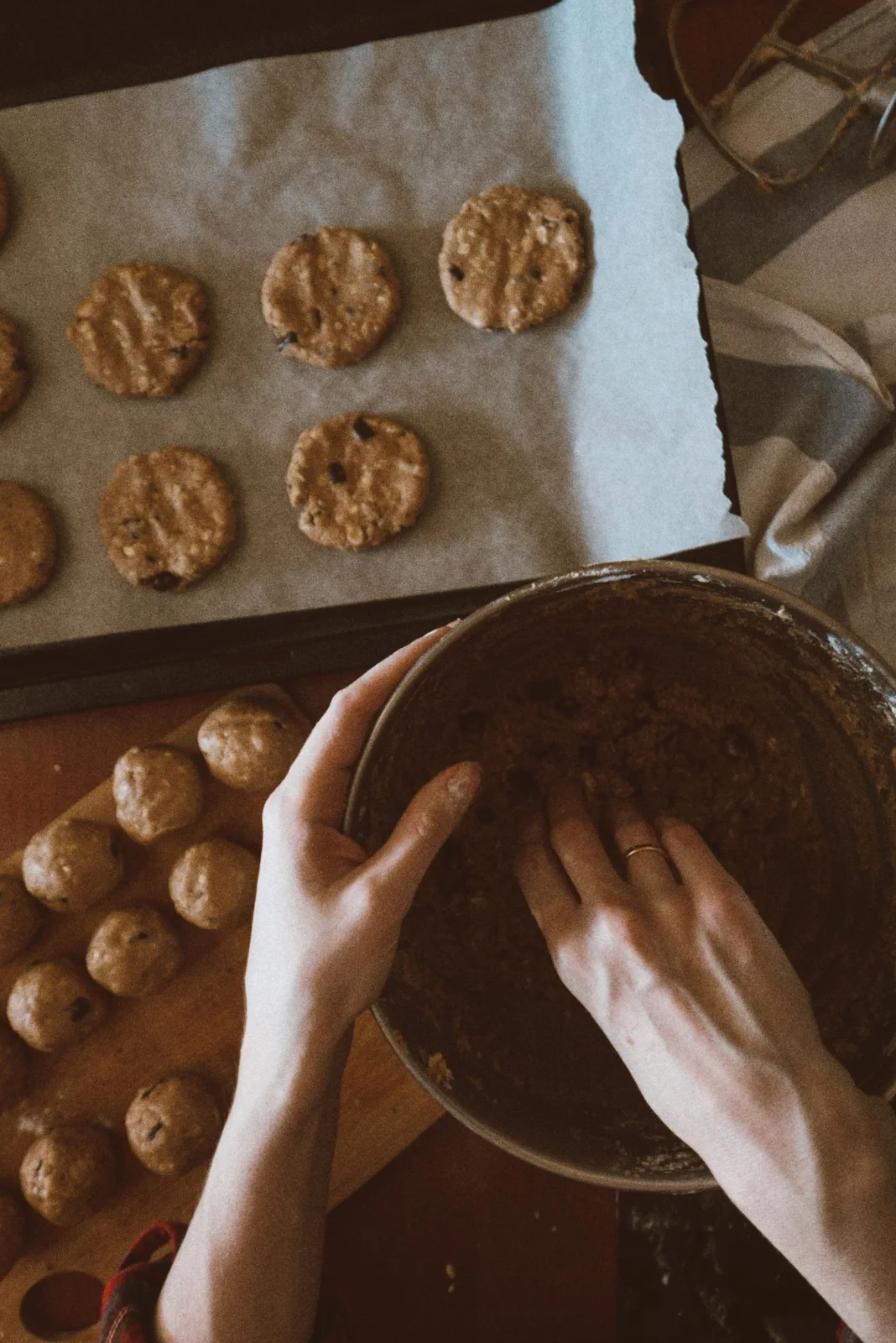
Illustrative photography by Ника Алексеева / Pexels. Images show editorial inspiration, rather than a product or recipe test.
An evening cookie bake should fit the evening you have. After work or school, there may be only one clear counter and a limited appetite for washing up. The answer is a smaller project with a complete plan: a recipe written for a modest yield, a suitable tray, and somewhere for the cookies to cool. This guide covers the setup and buying decisions. Use a dependable recipe for ingredient quantities, chilling, baking temperature and storage.
Our buying advice is research-led. Links may take you to retailers; any paid relationship is identified beside the link. See our affiliate disclosure.
Start with a realistic batch
Choose a recipe whose yield suits the household. Halving an unfamiliar recipe can introduce awkward measurements, particularly when it uses one egg. A recipe developed as a small batch removes that problem. Read the entire method before starting: a dough that requires a long chill may be a good weekend project but unsuitable for tonight.
Write down the time you want to finish cleaning. Work backward through cooling, baking, any chilling and mixing. If the schedule is too crowded, prepare the dough on another day using the recipe’s storage guidance. Avoid shortening a stated chill just to meet a deadline; the recipe may rely on it for handling and spread.
Give the tray some attention
Measure the oven shelf before buying a tray, allowing space around the tray as the oven manufacturer recommends. A tray described as large may not fit a compact oven. Check that it sits flat and that its rim or handles can be gripped with oven gloves. A rim can make handling easier, although your recipe may specify a particular sheet type.
| Evening constraint | Useful choice | Avoid buying solely for |
|---|---|---|
| One oven shelf | A tray that fits comfortably | Maximum advertised cookie count |
| Little counter space | One bowl and a simple portioning tool | A large accessory bundle |
| Different portion preferences | Consistent portions within each tray | Decorative scoop colors |
| Occasional baking | A versatile tray with clear care instructions | Specialized trays with one role |
Follow the recipe’s spacing guidance. Putting more dough on a tray does not necessarily save time if the cookies merge or cook unevenly. If multiple rounds are necessary, plan where the hot tray will cool. Do not assume fresh dough should be placed on a hot tray; follow the recipe’s directions for the next batch.
Portion for consistency
A spoon may be sufficient for an occasional batch. A scoop becomes useful when you want repeatable portions without weighing each one. Check its stated capacity and dimensions rather than assuming all cookie scoops are the same size. A large scoop can create cookies that require different spacing and baking time from the recipe’s intended portions.
Before buying, consider grip comfort, the release mechanism and washing instructions. A scoop should suit the texture it is intended to handle. For stiff dough, avoid forcing a mechanism beyond its manufacturer’s guidance. If your recipes provide a portion weight, a readable scale may be a more versatile purchase than several scoops. See choosing baking scales for the features that matter.
Keep the work area compact
Set out a bowl, measuring tools, the recipe and a spatula before opening ingredients. Clear a separate space for the hot tray and a rack for cooling. Keep packaging away from heat and return ingredients after measuring them. A small mise en place does not require multiple little bowls; it requires knowing what the next step needs and having room to do it.
If children help, assign tasks appropriate to their age and keep them away from the hot oven and trays. Raw flour and uncooked dough should not be treated as ready-to-eat snacks. Follow ingredient packaging and authoritative food-safety guidance, particularly when working with raw eggs or flour. Use utensils and surfaces that can be cleaned thoroughly after preparation.
Plan the leftovers before baking
A small batch still needs a storage plan. Let cookies cool as the recipe directs before packing, so trapped warmth does not undermine their texture. Choose a container that fits the quantity without crushing decorations or soft centers. Separate varieties when their textures or flavors could affect each other.
Only freeze dough or baked cookies when the recipe provides a suitable method and timing. Label the package with the contents and preparation date, and include any finishing instructions. Do not assume every dough can be baked directly from frozen. A freezer plan is useful when it supports a tested method; it is less useful when it creates a box of unidentifiable portions.
What is worth buying?
Prioritize a tray that fits, a dependable measuring method and a cooling surface. Buy a scoop after deciding that consistent portioning is a recurring need. Reusable liners should be checked for oven-temperature limits, dimensions and cleaning instructions. Baking parchment should be used within its packaging directions and kept away from exposed heating elements.
Avoid an entire decorating kit for a project whose appeal is simplicity. A small selection of tools that can be washed and put away quickly makes the next bake easier to begin. Organize recurring supplies using the weekend baking cupboard guide.
Frequently asked questions
Can I use one tray for several rounds?
Usually the important issue is following the recipe’s handling instructions between rounds and allowing appropriate tray cooling. Plan a safe resting space and do not rush the process by handling hot metal without protection.
Do I need a special cookie scoop?
No. It can improve convenience and consistency, but a spoon or scale may already suit your recipe. Buy a scoop for a repeated task, not as an entry requirement.
How do I keep this genuinely small?
Choose a modest-yield recipe before shopping and decide where the finished cookies will go. Browse Baking for more projects built around ordinary kitchen constraints.
This story belongs to our February 2026 editorial issue. This edition was published and reviewed on October 10, 2026. Our guidance is based on editorial research and practical planning, not an undisclosed hands-on product test.