The Weekend Baking Cupboard
By Love Coma Cakes Editorial · February 5, 2026 journal issue · Published October 10, 2026
Organize baking ingredients and equipment around the recipes you make, with practical container, labeling and shopping decisions.
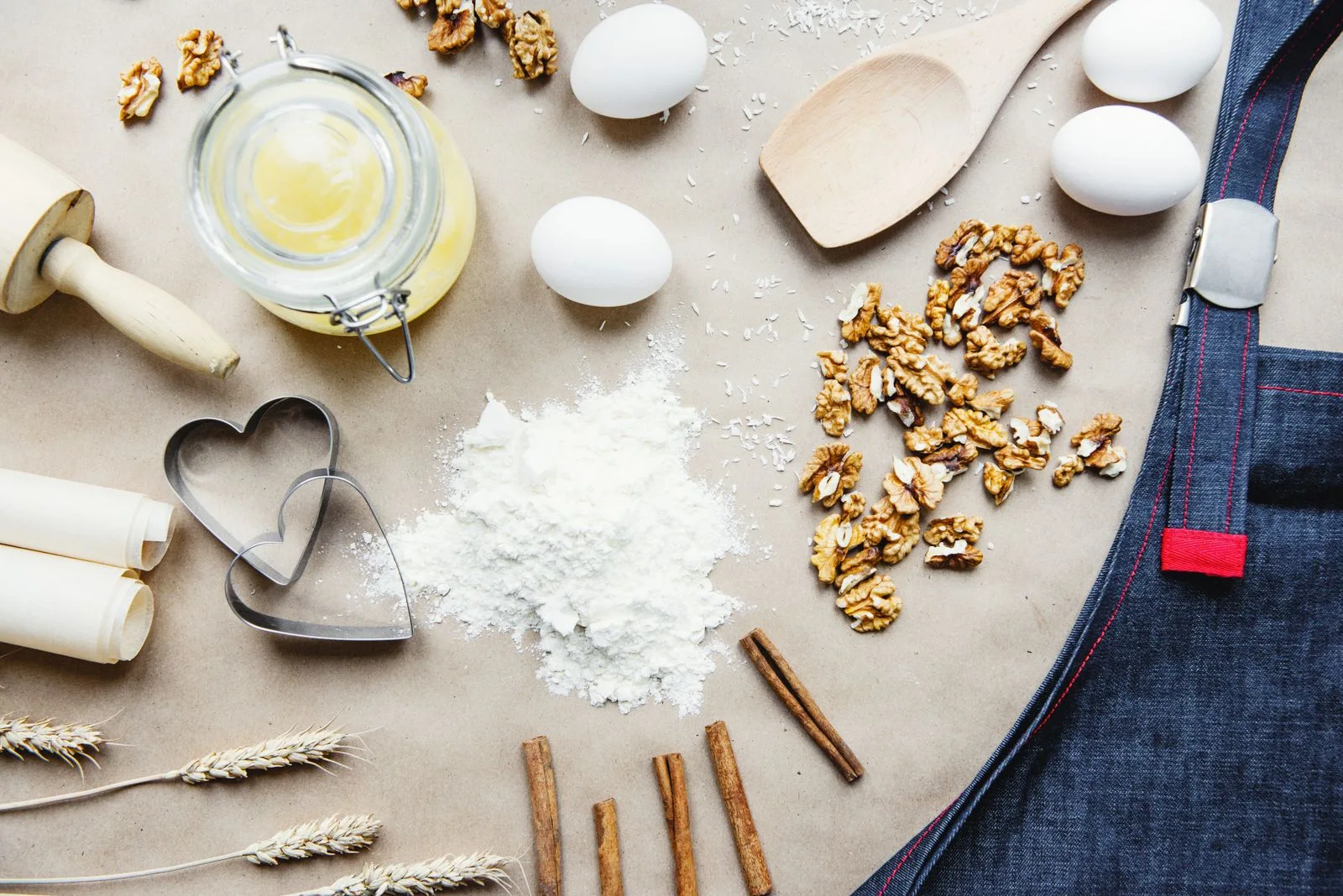
Illustrative photography by Ksenia Chernaya / Pexels. Images show editorial inspiration, rather than a product or recipe test.
A useful baking cupboard is not necessarily a shelf of matching jars. It is a place where you can find the right ingredient, read its label and see what needs replacing before starting a recipe. For a household that bakes on occasional weekends, the best system is often smaller than the picture-perfect pantry suggests. Begin with the recipes you actually make, then organize enough supplies to support them without buying duplicates.
Our buying advice is research-led. Links may take you to retailers; any paid relationship is identified beside the link. See our affiliate disclosure.
Take stock without creating a bigger job
Work on one shelf at a time. Bring its contents onto a clean surface and group similar items. Read packaging for storage instructions and date information. Check for damaged packaging or signs of pests, and follow appropriate food-safety guidance when deciding what to discard. Do not rely on appearance alone to judge the safety of every ingredient.
Make three short lists: ingredients used regularly, occasional ingredients tied to a specific recipe, and items you no longer need to replace. This stops the cupboard from becoming a collection of good intentions. If a bag was purchased for a cake you never made, decide whether there is a realistic upcoming use before buying its replacement.
Store for your actual routine
The most frequently used ingredients should be easy to reach without moving heavy appliances or stacks of pans. Keep labels visible and put older stock where it will be used first, within its appropriate date and storage guidance. Avoid placing ingredients beside a source of heat or moisture merely because the shelf is convenient.
| Your routine | Useful storage approach | Main buying question |
|---|---|---|
| Baking once or twice a month | Retain clear original labels | Will another container add useful protection? |
| Buying a regular large bag | A correctly sized food container | Can the entire amount fit without overfilling? |
| Many occasional ingredients | Small grouped bin or designated shelf | Can every label still be read? |
| Shared kitchen | Clear names and simple locations | Will everyone put items back consistently? |
Decide what to decant
Decanting can help with awkward bags, but it also creates washing and labeling work. An original package inside a protective container may be simpler than pouring everything into jars. If you do transfer ingredients, preserve the ingredient name, allergen information, date details and any storage instructions. Keep the original label or a clear record that remains associated with the contents.
Do not top up an old container indefinitely without cleaning and checking it. Follow the container maker’s washing and drying guidance, and let it dry fully before adding dry ingredients. Keep different flours and sugars clearly distinguished. Similar-looking ingredients should never have to be identified by a hurried guess during mixing.
Choose containers from the shelf outward
Measure the shelf’s height, depth and usable width before shopping. Account for door hinges and the space required to lift a lid. A container that fits tightly on paper may be difficult to remove when full. Consider its weight with ingredients inside, especially if it will be stored above shoulder level.
Check that the product is intended for food storage and that its seal, material and cleaning instructions suit the job. Wide openings can make scooping easier, but the opening should also allow comfortable cleaning. Matching containers are useful only when their capacities match your purchases. Avoid buying a set whose smallest and largest pieces have no role in your kitchen.
Give tools a sensible home
Keep the baking scale, measuring spoons and regularly used spatula near the ingredients if space permits. Nest pans only when doing so does not damage their surfaces. Store small loose tools in a shallow tray where you can see them rather than in a deep box that must be emptied for every bake.
Separate tools that are genuinely useful from equipment that appeared in one ambitious recipe. A piping kit does not need the best shelf position if you usually make loaf cakes. The guide to choosing your first cake pan can help evaluate whether an additional pan would support your routine or simply make storage harder.
Build a repeatable shopping note
Keep one shared list, whether on paper or a phone. Add an ingredient when it reaches the amount needed for the next planned recipe, rather than when its package is completely empty. Check that list against your actual baking plan before shopping. A promotion is useful only if you can store and use the purchase appropriately.
For occasional bakers, smaller packages may be easier to manage despite a less attractive unit price. Compare waste, storage and purchase frequency alongside price. Do not stock every possible decorating ingredient in anticipation of an unspecified occasion. Buy the unusual item when a recipe and date are chosen, then record what remains afterward.
A five-minute reset after baking
Wipe spills, close packages and return items with labels facing forward. Add depleted ingredients to the shopping note. Check that containers and utensils are clean and dry before storage. This brief reset protects the usefulness of the system without requiring another full cupboard project every weekend.
The aim is to make the next recipe easier to start. An imperfect-looking shelf that everyone understands is more useful than a display that demands constant rearrangement. For a manageable next project, read small-batch cookie night.
Frequently asked questions
Should every ingredient go in an airtight jar?
Follow each ingredient’s storage instructions. A suitable container can help, but uniform decanting is not a requirement. Preserve all essential packaging information when transferring ingredients.
Is glass always the best choice?
Consider weight, breakage, shelf position, lid design and cleaning. A food-storage product that fits your household’s needs is more useful than a material chosen only for appearance.
How often should I reorganize?
Review the shelf when your baking habits change or it becomes difficult to use. Small resets after each bake usually reduce the need for major reorganizations. Find more practical equipment advice in Baking.
This story belongs to our February 2026 editorial issue. This edition was published and reviewed on October 10, 2026. Our guidance is based on editorial research and practical planning, not an undisclosed hands-on product test.